
Compound gears
A compound gear sample showing the outer tooth profile and central connection structure. Gear geometry, material and interfaces are reviewed for each drawing.
Discuss your component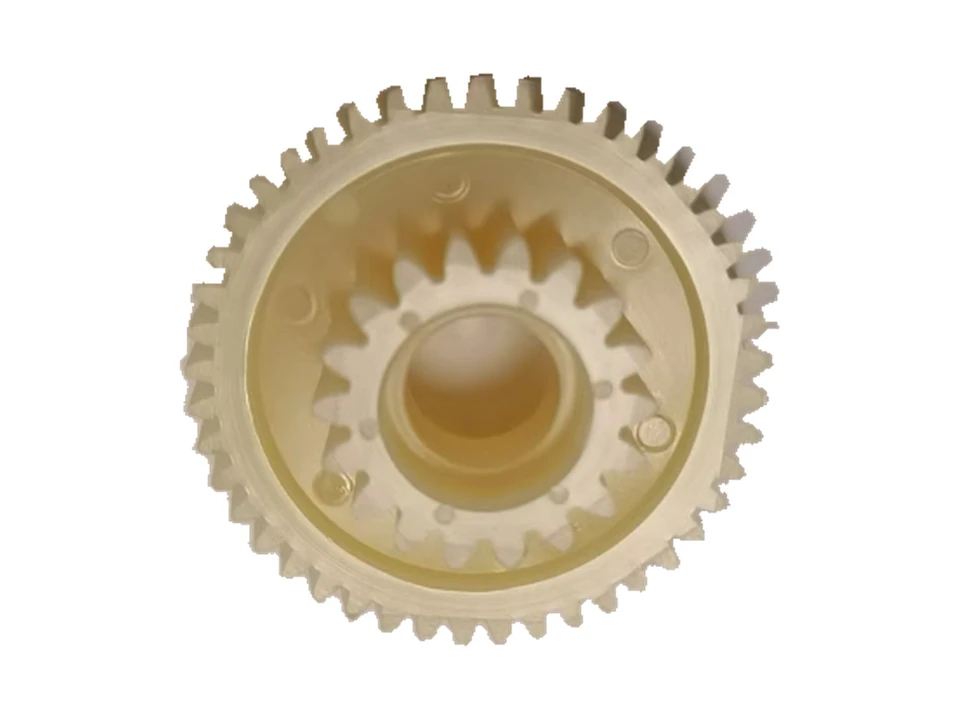
Start with how the gear fits and transmits motion.
Gear development depends on the mating geometry and the surrounding mechanism. Bring the tooth definition, material requirement and inspection criteria together so the interfaces can be reviewed as a whole.
- Tooth geometry
- Provide the tooth geometry and mating gear information, including the relative position of each transmission interface.
- Compound geometry
- Review the relationship between the gear features, surrounding walls and molding direction when defining the tooling.
- Central interface
- Define the central fit, assembly datums and inspection method on the drawing, together with the mating part.
Bring the details that define your part.
Clear drawings and requirements help define the tooling, molding and inspection work.
- Gear and mating geometry
- Share the 2D drawing and available 3D model, tooth definition, mating interfaces and drawing revision.
- Operating requirements
- Specify material requirements, intended load and operating conditions, together with your acceptance criteria.
- Tooling and inspection
- Identify critical dimensions, inspection datums, sample needs and project quantities to define the molding scope.
Questions before starting a project
Which supply scope does this page cover?
The discussion starts with molded gear components and their tooling. Include the requested component and assembly responsibilities in your inquiry to define the project scope.
Can you assess a different gear design?
Send the drawing and mating requirements for a tooling and molding review. Each project is assessed around its own gear geometry and assembly requirements.
What determines the material and gear accuracy?
The application, load, operating conditions and inspection criteria guide the review. Share the specified material and gear accuracy requirements with the drawing.
Start with your drawing and requirements.
Share your drawing revision, quantities and key requirements so we can discuss the project.